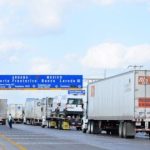
After a coalition of more than 100 trade associations urged U.S. Trade Representative Robert Lighthizer to keep trucking provisions allowing long-haul trucks from Mexico in a renegotiated North American Free Trade Agreement, the Owner-Operator Independent Drivers Association sent a letter to Lighthizer with a counterargument: NAFTA’s Mexican long-haul truck program was a failure and needs
With Driver Shortage, industry needs Mexican-Americans The trucking industry is increasingly turning to minorities such as Mexican immigrants to meet a critical need for drivers, even as President Donald Trump and others succumb to the false narrative that deem them unsafe and a threat to American jobs. But trucking jobs are not being lost to Mexico,
Latest round of NAFTA 2.0 brings out Mexican Trucking and the same old debunked fear mongering from the usual quarters The controversial issue of Mexican long-haul truckers servicing markets in the United States was not on the official agenda for last week’s NAFTA talks in Ottawa, but it could emerge as a key test of
How could Mexico inflict the most damage on the United States? In normal times this question would not be top of mind for Mexican policy makers. Mexican governments over the last quarter-century have consistently pushed back against the nation’s historical resentment toward the United States, hoping to build a more cooperative relationship with its overbearing
Teamsters President James Hoffa is “disappointed” the OBJECTIVES FOR THE NAFTA RENEGOTIATION did not include a specific point of something near and dear to his heart, the banishment of Mexican trucks and drivers from American highways. In a statement released Tuesday, Hoffa said: “I am disappointed that the latest version of the administration’s goals for
A week after the 9th Circuit Court of Appeals tossed out the Teamsters and OOIDA’s latest baseless and frivolous lawsuits, OOIDA has issued a non-responsive response on their website landlinemag.com Sandi Soendker, Land Line editor-in-chief, to her credit, wrote, without embellishment the following: A federal court has ruled in favor of the U.S. Department of
The North American Free Trade Agreement (NAFTA) in regards to the motor transport sector is the history of an unfulfilled and violated treaty, on the part of the US government, which is the reason why in the process of renegotiation the Mexican government must go forward with a strong posture, and be on the offensive,
Interesting happening in Mexico City these days as the local government bowing to demands to do something about the air pollution in the city came up with the bright idea called “Hoy, no Circulo” and applying it to truckers…. In short, it means you ain’t driving on certain days and certain hours. This didn’t set
Concerned with trucks hauling oversize/overweight loads that exceed Federal size and weight limits, Zepahua Lilian Garcia, a Deputy in the lower chamber of the Mexican Congress from the state of Veracruz, has introduced a bill to reform provisions of Mexico’s Motor Carrier Law. Her bill would require that owners and drivers of trucks registered in Mexico
Roadside inspectors no longer will place Mexican or Canadian truckers operating in the United States “Out-of-Service” if they are unable to communicate in English, according to new Commercial Vehicle Safety Alliance “tolerance guidelines”. CVSA said the procedures will go into effect April 1. The changes were approved by CVSA’s board and the majority of the
The Petition for Review (15-70754) filed by the International Brotherhood of Teamsters with the Owner-Operators Independent Drivers Association (OOIDA) jumping in as intervenors, is a study in ridiculous distortions of previous Court rulings which have all ruled in favor of FMCSA, and baseless rhetoric. The latest filing by both parties before the Ninth Circuit Court
The FMCSA, this week, published in the Federal Register, it’s decision to accept the Norma Oficial Mexicana (NOM) or Official Mexican Standard) concerning the periodic inspection (PI) of commercial vehicles (CMV’s). FMCSA reviewed NOM-068-SCT-2-2014 (NOM68) and determined that it should be added to the list of programs which are compatible to, or as effective as, the
After the Cross Border Pilot Program successfully concluded last year and permanent operating authority was given to the participants who earned it, and despite the continued outcry and threats from those who continued to adamantly and unsuccessfully opposed it, I took a short hiatus from the issue for some “me” with my family. After 10 years of successfully
If anyone is wondering why nothing has been written about the Mexican truck issue, it’s for a very good reason. As the data from FMCSA has proven, it’s always been a non-issue. Since FMCSA began issuing permanent operating authority to Mexican carriers the first of the year, only three, other than the Pilot Program participants
Einstein had it right! Insanity, pure insanity from the penthouse executive suites in Grain Valley Missouri, headquarters to the Owner Operators Independent Drivers Association. As promised previously, we have the filing OOIDA made yesterday to intervene in the latest frivolous and baseless lawsuit filed by the Teamsters in failed attempt to keep legal, safe and
Three months ago, the DOT Office of Inspector General released it’s final report to Congress concerning the previously completed Pilot Program which tested the mettle of Mexico carriers to operate safely and in full compliance with our laws and regulations. Despite a low number of participants in the program, the program was successful and in
January 9, 2015 WASHINGTON – The U.S. Department of Transportation announced today that Mexican motor carriers will soon be able to apply for authority to conduct long-haul, cross-border trucking services in the United States, increasing economic and export opportunities between the two countries, and marking a significant milestone in implementation of the North American Free
After a three year hiatus where we heard nothing from Rep. Peter DeFazio (D-Or) about the Cross Border Pilot Program, despite being one of it’s most outspoken critics at the behest of his handlers at Owner Operator Independent Drivers Association (OOIDA), it appears he is back in the fold spouting the party line in opposition
The Owner Operators Independent Drivers Association (OOIDA), whose continued efforts to stop Mexican trucks over the past two decades has failed miserably, responded this afternoon to the findings of the Cross Border Pilot Program final audit released this morning. As usual, instead of accepting the facts, they had to put their own spin on the
In a surprising but not unanticipated move, the FMCSA granted the 13 Mexican motor carriers who participated recently concluded Cross Border Pilot Program with Mexico Standard Operating Authority meaning they can continue to conduct business in the United States beyond the commercial zones as they have been doing for the past 36 months. And as
The Federal Motor Carrier Safety Administration (FMCSA) announced that the Motor Carrier Safety Advisory Committee’s (MCSAC) subcommittee on the U.S.-Mexico Cross Border Long Haul Trucking Pilot Program will meet on Monday, July 28, 2014, from 9 a.m. to 4:30 p.m., Eastern Daylight Time (E.D.T.). The meeting will be held at FMCSA’s National Training Center (NTC),
The U.S. Supreme Court denied the Owner Operator Independent Drivers Association (OOIDA) latest attempt to shut down the successful Cross Border Pilot Program with Mexico. OOIDA contended that a federal appeals court erred when it said the Federal Motor Carrier Safety Administration could exempt Mexican and Canadian drivers from U.S. medical certification requirements. Last year