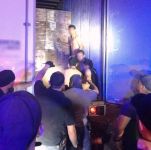
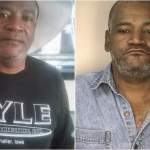
Driver in Deadly Human Smuggling Case Pleads Guilty in San Antonio James M. Bradley Jr., 61, of Clearwater Florida, pleaded guilty in federal court in San Antonio to one count of transporting immigrants resulting in death and another count of conspiracy. Police officers came upon the truck in the parking lot of a San
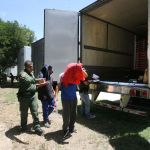
The Driver, Comothial Harper of Bainbridge Georgia had made earlier successful smuggling runs Federal agents found 23 migrants and more than 200 pounds of marijuana hidden in a semitrailer just outside of the El Paso city limits, officials said. Homeland Security Investigations agents assigned to the El Paso Border Enforcement Security Task Force pulled over the
August 28 arraignment set for James Bradley in deaths of 10 Migrants James Matthew Bradley, 60, of Clearwater Florida, the man accused of transporting hundreds of undocumented immigrants in a big rig smuggling operation, which led to the deaths of 10 immigrants last month, has August 28 at 1:30pm as the date of his arraignment
Tip from relatives in Mexico led police to truck stop Seventeen undocumented immigrants were discovered on Sunday locked inside a tractor-trailer parked at a truck stop in Edinburg, Texas, according to Edinburg Police Chief David White. Dispatch received a call from someone in Mexico who reported that a relative was trapped inside a trailer parked
MONTERREY NL - The case of 15-year-old Sergio Hernandez Guerra who was murdered by Border Patrol Agent Jesus Mesa Jr in 2010 heads to the Supreme Court, as justices consider the case of questioning whether a foreign national, murdered on their own soil has certain Constitutional protections. In a fight that pits the Mexican government
A bus driver trying to beat a Kansas City Southern freight collided with the train yesterday resulting in 21 deaths including two children and 26 others injured. The bus owned by Transportes Frontera #4146,, part of Grupo Estrella Blanca was driven by Jesús Carlos Fernández Rico, 39 who was transported by ambulance to a hospital in
Over the last four years, a half dozen Mexican families have suffered the loss of one of their family members as a result of Border Patrol shootings. All of the fatalities were of unarmed men, were Mexican and in Mexican territory. The Supreme Court will likely decide the fate of legal efforts to hold the
TIJUANA.- On July 9th, after 101 days incarcerated in a Mexican prison, U.S. Marine reservist Andrew Tahmooressi, with his mother Jill and two defense attorneys in tow, finally appeared in court before a Tijuana federal judge. This was his his first evidentiary hearing since crossing the U.S. border on March 31st with his truck laden
Many may be wondering and indeed are saying in the social media, “What the hell? It’s only another damned Mexican” while at the same time, defending Jesus Mesa Jr. as a “hero”, much the same as they are doing with Mr. Andrew Paul Tahmooressi, who is jailed in Tecate B.C. facing weapons charges. And to
For the third time in as many weeks, Andrew Tahmooressi has a new lawyer, with his mommies approval of course. News this afternoon that Jill Tahmooressi has hired the Mexican attorney who was able to get charges dropped against former Tijuana mayor Hank Rhon when police arrested Rhon on weapons charges for having more than
Today on the front page of El Universal, the declaration of a protected witness in the federal (PGR) case against El Chapo Guzman says that the US Border Patrol escorted trucks of weapons to the border, abandoned the vehicles and assisted members of the Sinaloa Cartel who then took the guns into Mexico. The declarations come
Evidence is emerging that inactive Marine Sgt. Andrew Tahmooressi’s ingress into Mexico on the night of March 31, 2014 was anything but a mistake as he and his mother have been claiming. A receipt from the Hotel Nelson, a somewhat historic $20.00 a night “hot sheet” hotel abutting Tijuana’s Zone de Tolerancia” has been uncovered,
On May 28, 2014, former U.S. marine Andrew Tahmooressi appeared in a Tijuana courtroom where he was to give a statement of evidence in the hearing concerning his entrance into Mexico on March 31, 2014 with three weapons, including an assault rifle, in his pick-up truck. The twenty-five-year-old has maintained that he missed the last
In the story we posted Monday that reported irregularities in imprisoned Marine veteran Andrew Tahmooresi claims of innocence when he crossed the Mexican border at San Ysidro with prohibited weapons and over 400 rounds of ammunition, the San Diego Union Tribune did a follow up with even more information concerning the contradictions in Tahmooresi’s story. On Tuesday,
Former Marine Andrew Paul Tahmooressi did not enter Mexico by mistake, according to an article published Friday in the Tijuana newspaper ZETATIJUANA. Information obtained from a surveillance camera video showing Tahmooressi’s entrance into Mexico and investigations done on both sides of the border have led to this conclusion which is included in the investigative package
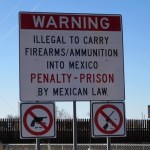
Here we go again. Another U.S. Marine jailed in Mexico for crossing the border with weapons in his vehicle. His excuse? In an interview Sunday with the San Diego Union Tribune, Marine Reserve Sergeant Andrew Tahmooressi, 25, an active Marine reservist who served two combat tours in Afghanistan said he was going to meet friends in the
With improvements at the Port of Brownsville forthcoming and investments into the county’s International Bridge System setting the stage for growth, the trucking industry has weighed heavily on the minds of business-savvy officials throughout Cameron County as of late. Increasing freight and truck traffic at the bridges is a great way to pad the county’s
Ya’ll have heard of Canada haven’t you? That country to the north of us that under NAFTA we allow more than 30,000 of their trucks to cross into the United States freely, many times driven by so-called “New Canadians”, which is a term for immigrants from middle eastern countries? A new cross border pilot program
At least 10 members of the band La Reyna de Nuevo Leon were killed and 5 others injured this morning when the van the group was traveling in sideswiped a southbound semi, crossed the median and collided head on with a northbound semi truck. The band was returning to Monterrey after playing a gig Saturday
As tragic as the Patriots Day bombings in Boston was, and our prayers are with the good people of that city, this article has nothing to do with the bombing itself. There is plenty of coverage of the event all over the internet. The latest news from the authorities is they’ve identified two suspects, two
The National Immigration Institute (INM) has confirmed that Texas Trucker Jabin Akeem “Wrong Way” Bogan was flown in to the Abraham González International Airport in Ciudad Juárez and deported at the Bridge of the Américas just before noon. Ironically, the Bridge of the Americas was where Bogan’s odyssey began 7 months ago when he claims what was
With the recent attention we and others have brought to the rash of murders of Mexican citizens on Mexican soil by US Border Patrol agents, we’re coming closer to obtaining justice for those victims of these renegade agents. On June 7, 2010, 15-year-old Sergio Adrian Hernández Güereca, was murdered by U.S. Border Patrol Agent Jesus